


Finland explores carbon capture opportunities for the forest industry
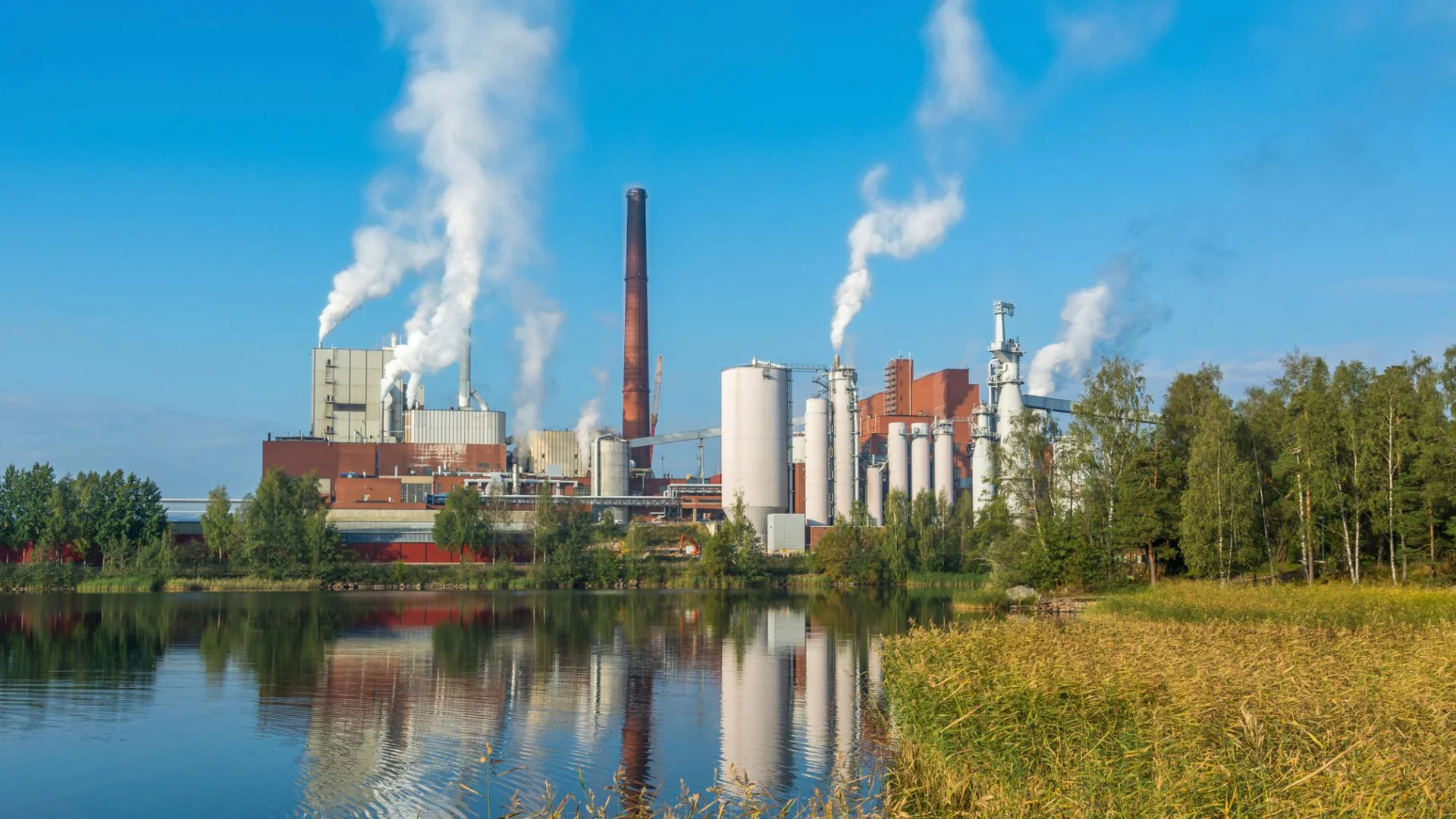
Finland’s forest industry is increasingly evaluating carbon dioxide emissions not only as an environmental challenge, but also as a potential industrial resource capable of generating new long-term business opportunities. Research institutes and industrial stakeholders are studying how emissions from pulp mills and bioenergy plants could be captured, processed and reused in emerging sectors linked to synthetic fuels, chemicals and carbon storage technologies.
The discussion is gaining momentum as the Finnish forest sector faces structural changes driven by weaker demand in some traditional paper grades, rising production costs and stricter European climate targets. Every year, Finland’s forest industry and biomass-based energy production generate significant volumes of biogenic carbon dioxide, which researchers believe could become an important feedstock for future low-carbon industrial activities.
Studies carried out by Finnish research organisations, including the Natural Resources Institute Finland (Luke) and VTT Technical Research Centre of Finland, indicate that the development of a carbon-based economy could create substantial economic value for the country over the coming decades. According to various scenarios analysed by researchers, the overall contribution to the Finnish economy could reach several billion euros by 2040 if technologies become commercially viable and industrial investments accelerate.
One of the main concepts under evaluation involves combining captured biogenic carbon dioxide with hydrogen produced using fossil-free electricity. This process could allow the production of electrofuels and synthetic fuels for sectors such as aviation and heavy transport, where reducing emissions remains particularly challenging.
At the same time, industry experts acknowledge that major obstacles still remain before these technologies can be deployed on a large industrial scale. Carbon capture systems, hydrogen production facilities and synthetic fuel plants would require extremely high capital investments as well as large quantities of renewable electricity. Several of the technologies involved are also still in relatively early stages of commercial development.
Researchers estimate that the overall investments required to establish a large-scale carbon economy in Finland could amount to tens of billions of euros over the next 15 years. The sector is also expected to remain strongly influenced by future EU climate policy, subsidy frameworks and energy market developments.
The search for alternative business models comes at a delicate moment for the Nordic forest industry. In recent years, a number of paper production facilities across the region have reduced output, converted operations or closed entirely as market conditions evolved. At the same time, growing attention has been placed on the climate impact of forestry activities and on the declining carbon sink capacity of Finnish forests.
Environmental analysts have pointed out that increased harvesting levels and emissions from peatlands have weakened the ability of Finland’s forests to offset national emissions. This has intensified pressure on both policymakers and industrial companies to identify technological solutions capable of supporting climate targets while maintaining industrial competitiveness and continued use of forest raw materials.
Despite the optimism surrounding carbon capture and hydrogen-related projects, some observers remain cautious. Across Europe, several large-scale hydrogen initiatives have already encountered delays, rising costs and uncertain market demand. Green hydrogen production continues to depend heavily on access to low-cost renewable electricity and, in many cases, public financial support.
Carbon capture and storage technologies also remain expensive and energy-intensive, with only a limited number of commercial-scale facilities currently operating in Europe. Nevertheless, many Finnish industry stakeholders believe that future EU regulations promoting low-carbon fuels and sustainable industrial production could create important opportunities for countries capable of developing advanced carbon utilisation technologies early.
According to researchers involved in the studies, one of the key strategic questions for Finland will be whether the country chooses to build a complete domestic value chain around captured carbon dioxide or limits itself to supplying raw materials for processing elsewhere.