European recycling industry seeks “Made in Europe” preference for recycled plastics
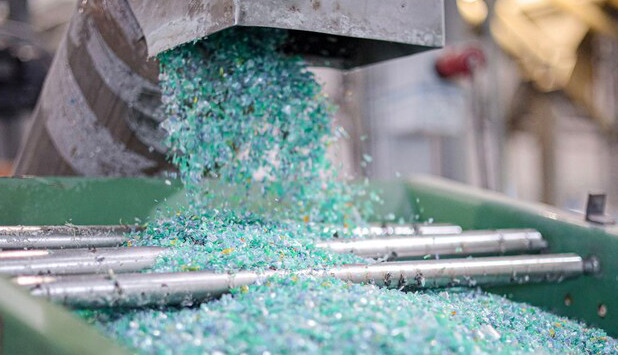
Three European recycling associations are calling for plastics collected and recycled in Europe to be given priority under the EU’s new recycled-content targets, warning that rising imports, weak demand and inadequate controls are putting increasing pressure on the European recycling industry.
The request has been presented in a joint statement by Recycling Europe, the European Waste Management Association FEAD and Plastics Recyclers Europe (PRE). The organisations are asking the European Commission to establish a clear preference for European materials when implementing the Packaging and Packaging Waste Regulation (PPWR).
The objective is to direct more demand towards recycling facilities operating in Europe. According to the associations, the current framework could otherwise allow producers to meet recycled-content targets by using cheaper imported materials without guaranteeing equivalent environmental, quality and traceability standards.
The statement comes as the European plastics recycling industry is facing what the organisations describe as an unprecedented crisis. Several recycling plants have closed, while demand for recycled material produced in Europe has weakened.
At the same time, imports of products claimed to contain recycled plastic have increased. Industry representatives have questioned whether the origin of these materials and their actual recycled content can always be reliably verified.
Targets should support European waste recycling
The PPWR establishes binding requirements for the proportion of recycled plastic used in certain types of packaging. The rules are intended to stimulate demand for recycled materials and promote a more circular use of resources. The associations want plastics counted towards the targets to originate primarily from post-consumer waste collected and recycled in Europe. They are asking the European Commission to include this principle in the implementing act currently being prepared.
More specifically, the organisations are calling for packaging produced or filled in the EU to comply with recycled-content targets using plastics originating from post-consumer waste collected and recycled in Europe, including the EU27, EFTA countries and the United Kingdom.
A similar geographical principle has already been widely applied by Member States under the implementation of the Single-Use Plastics Directive. The recycling organisations argue that this approach should now be extended permanently within the PPWR framework.
Their concern is that European recycling companies are required to comply with demanding environmental and operational standards while competing with imported materials produced under potentially less stringent conditions.
According to the associations, this imbalance could undermine investment in new European recycling capacity. Without sufficient demand for recycled plastics produced in Europe, additional facilities could be forced to reduce production or close, even as the EU strengthens its circular economy objectives. Giving European materials preferential treatment could nevertheless have an impact on prices. If the supply of eligible recycled plastics remains limited while demand increases, packaging producers could face higher material costs. The joint statement does not examine this aspect in detail.
Equivalent rules for imported packaging
The industry groups are also calling for so-called mirror measures covering packaging manufactured and filled outside the European Union. Under this approach, recycled plastics originating from non-EU countries should count towards PPWR targets only when manufacturers can demonstrate that the waste has been managed in an environmentally sound manner and under requirements equivalent to those applied within the EU.
The associations propose equivalence at both country and facility level.
At country level, only recycled plastics originating from third countries capable of guaranteeing environmentally sound waste management in line with EU rules, together with equivalent circular economy measures, should be eligible to count towards PPWR recycled-content obligations. The European Commission would be responsible for assessing whether individual third countries meet these equivalence requirements.
At facility level, recycled plastics should come only from certified recycling plants located in authorised countries. Independent third-party certification would be required to demonstrate that non-EU facilities comply with equivalent environmental, operational and traceability standards. According to the joint statement, this certification should be valid for one year and subject to independent verification.
Another option would allow packaging produced outside the EU to use recycled plastics originating in Europe. In this way, imported products placed on the European market would also contribute to demand for materials produced by European recycling facilities. The organisations maintain that equivalent requirements are necessary to prevent European manufacturers and recyclers from operating under stricter conditions than competitors located outside the EU. Such provisions would, however, require effective monitoring of long international supply chains and reliable systems for determining whether certification schemes and individual facilities meet the required standards.
Full traceability across the supply chain
Transparency and traceability are therefore central to the organisations’ demands. The origin of post-consumer plastic waste and recycled plastics should be traceable throughout the entire value chain, from collection and sorting to recycling, processing and final packaging production. The associations are asking for harmonised verification procedures across the European Union. Member States would also need to carry out effective checks on imported packaging and on the recycled-content claims associated with those products.
Without common control and verification systems, recycled content could be calculated differently across individual countries. This could make comparison more difficult and create opportunities for inaccurate claims concerning the content and origin of recycled materials.
The organisations therefore want the future PPWR implementing act to include robust market-surveillance measures, harmonised controls and sufficiently dissuasive sanctions. They also support the introduction of a chain-of-custody approach, backed by appropriate documentation and independent third-party verification, to improve transparency throughout international supply chains.
The proposal has both environmental and industrial-policy dimensions. The PPWR recycled-content targets could create a significant market for recycled plastics, but their impact on Europe’s recycling industry will depend on where the material is produced and which environmental and operational standards are applied.
According to the three associations, the regulation can achieve its environmental and industrial objectives only if it creates genuine demand for high-quality recycled plastics produced in Europe or under standards equivalent to those applied within the EU.
Industry seeks a permanent “Made in Europe” approach
Recycling Europe, FEAD and Plastics Recyclers Europe argue that a “Made in Europe” preference, combined with robust mirror measures and effective enforcement, would create fairer competition, strengthen Europe’s strategic autonomy and encourage investment in European recycling capacity. Recycling Europe represents national federations and recycling companies across Europe and covers a wide range of recycled materials, including metals, paper, plastics, textiles, tyres, ships, construction and demolition waste and WEEE.
FEAD represents the European private waste and resource management industry across the entire waste-management value chain, from collection and sorting to recycling, energy recovery and final disposal.
Plastics Recyclers Europe represents the European plastics recycling industry. According to the association, the sector accounts for more than €9.1 billion in turnover, approximately 13.2 million tonnes of installed recycling capacity, around 850 recycling facilities and more than 30,000 employees.
The proposals represent the joint position of the three industry organisations. The European Commission is expected to define how European and non-EU recycled plastics will be treated through the forthcoming implementing rules for the PPWR mirror clause, which are expected in the fourth quarter of 2026.