European paper sacks cut carbon footprint by 9% between 2021 and 2024
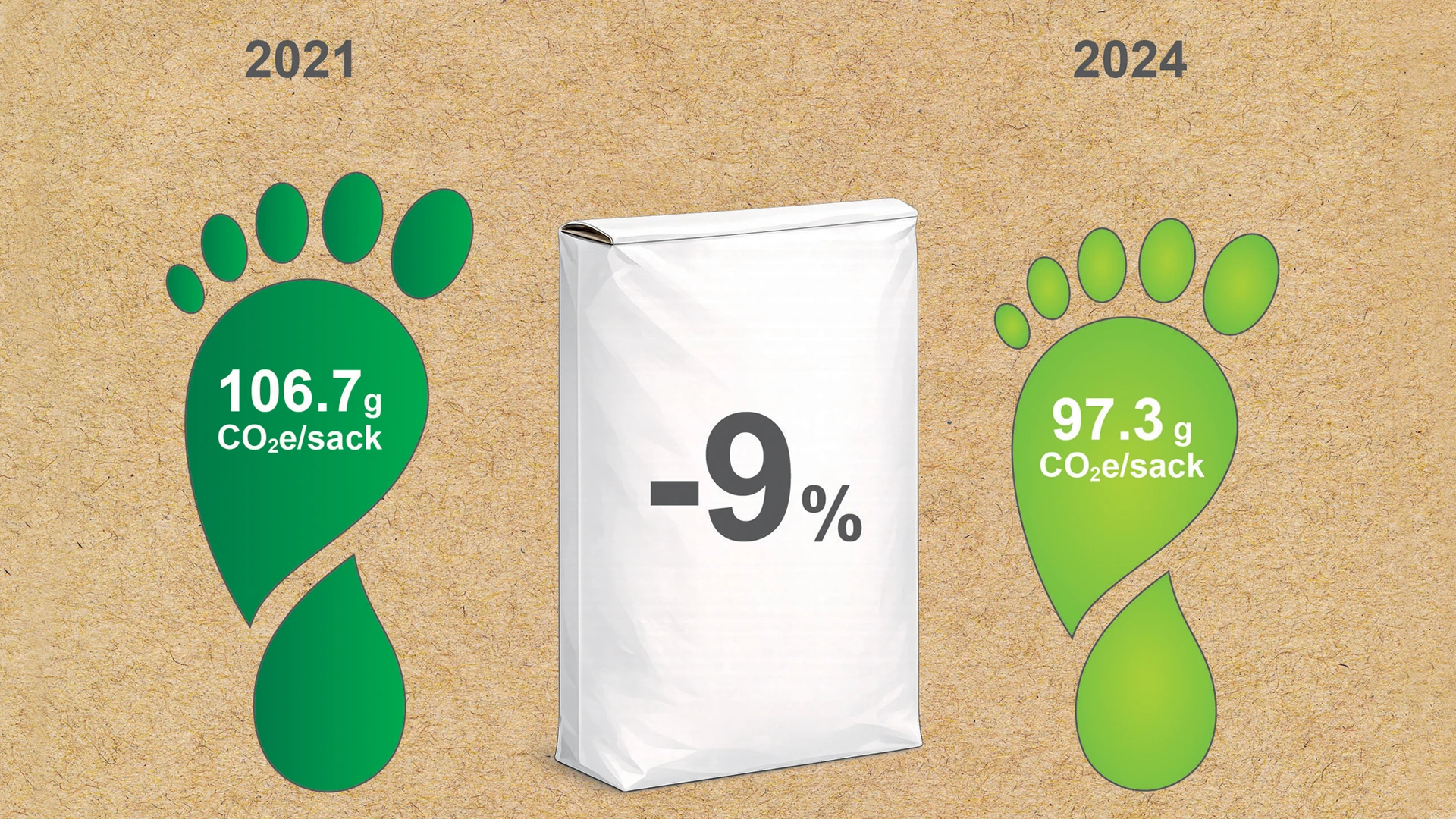
European paper sacks have significantly improved their climate performance, reducing their carbon footprint per sack by 9% between 2021 and 2024. The results emerge from a study conducted by RISE on behalf of the European Paper Sack Research Group (ESG), a joint initiative of EUROSAC and CEPI Eurokraft.
Over the same period, the fossil carbon footprint per tonne of sack kraft paper decreased by 5%, highlighting continuous progress across the value chain. Increased use of renewable energy in both sack kraft paper production and converting operations played a central role in achieving these reductions.
The cradle-to-gate assessment shows that emissions per paper sack fell from 106.7 g CO₂e in 2021 to 97.3 g CO₂e in 2024. The production of purchased sack kraft paper remains the main contributor, accounting for approximately 60% of the total fossil carbon footprint of paper sacks. Emissions from sack kraft paper production decreased from 484 kg CO₂e per tonne in 2021 to 462 kg CO₂e in 2024.
“These results demonstrate how our industry is driving decarbonisation through joint efforts,” said Catherine Plitzko, General Delegate of EUROSAC. “The findings of this study will help us to further refine our net zero pathway and identify where we can achieve the greatest impact.”
Renewable energy as a key driver
A major factor behind the reduction in emissions has been the shift towards renewable and low-carbon energy sources. By 2024, 54% of the electricity consumed by sack kraft paper mills originated from renewable or low-carbon sources, up from 29% in 2021. In addition, biofuels accounted for 85% of on-site fuel consumption, with internally generated biofuels representing 77% of total on-site energy use. Mills also generated approximately 58% of their own electricity demand.
Converting operations followed a similar trend. Emissions related to purchased grid electricity decreased by 44% between 2021 and 2024, while 41% of electricity used in converting plants came from renewable or low-carbon sources in 2024.
A low-carbon packaging solution
The European paper sack industry has been systematically collecting environmental performance data since 2007, enabling continuous improvement and providing customers with reliable information to support Scope 3 emissions reporting.
“Our study confirms that paper sacks are a low-carbon packaging solution with a steadily declining fossil carbon footprint,” added Plitzko. “We are building on this progress by translating our net-zero pathway into concrete actions and expanding circular initiatives.”
Paper sacks are widely recyclable, and initiatives such as “Paper Sacks Go Circular,” now expanded into the “Construction Goes Circular” association, aim to further improve collection and recycling rates, reinforcing their contribution to a circular economy.