Asia Pulp & Paper issues update on fire management in South Sumatra
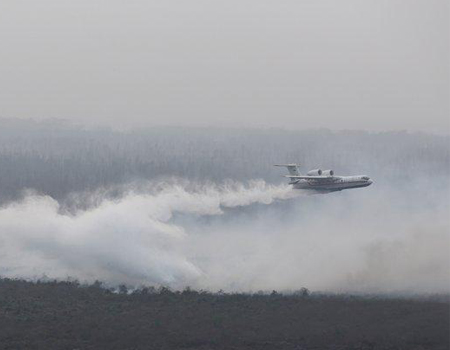
Asia Pulp & PaperGroup (APP) today set out the details of its ongoing fire management and suppression programme to supportits pulpwood suppliers in South Sumatra and beyond.
Indonesia continues to manage the 2015 fire season which has beendramatically exacerbated by the El Nino climate phenomenon, triggering severe weather events globally including outbreaks of bush fires in Australia and the current Hurricane Patricia in Mexico and the United States of America.
APP has agreed to provide assistance to Indonesia’s National Disaster Management Authority (Badan Nasional Penanggulangan Bencana / BNPB) through the provision of aerial water-bombing fire suppression support.
The two Russian Beriev Be-200 amphibian water-bombing planes with 12,000 litre water capacity arrived in South Sumatra earlier this week to support the Indonesian government’s efforts in tackling the forest fires in the wider landscape in the region.
“We are pleased to be given the opportunity by the Indonesian government to support the country in the trying time like this. And we are committed to doing even more,” said Aida Greenbury, Managing Director of Sustainability at APP.
“The El Nino phenomenon is affecting countries around the world and our urgent efforts to suppress fires continue. We willcontinue to support our Government whilst also fighting fires in the affected landscapes. Ultimately, fire management involves many actors and the need for coordinated action has never been more critical.”
In its latest update the company has set out three key areas for fire suppression and management in South Sumatra:
1. Zero Burning Policy. APP has implemented a Zero Burning Policy in accordance to the Ministry of Forestry Decree No. 206/KPTS-II/95, which was launched in April 1995. APP’s pulpwood suppliers socialise these policies internally and with all outside parties hired to clear land, replant trees, and/or maintain the replanted trees to ensure these policies are adhered to.
2. Fire Suppression. In the short term APP and its suppliers have joined forces with provincial, central government and the Indonesian military to tackle the fires at a wider landscape level. In total, more than 1,700trained firefighters together with hundreds community members of the Fire Awareness Program (Masyarakat Peduli Api) are on the ground in South Sumatra everyday, also assisted by aerial support. Theresources under APP and its suppliers in Indonesia include more than 2,900 trained fire fighters, 3 fire suppression helicopters, satellite monitoring and surveillance drones. In addition, APP’s community engagement programs have to-date reached more than 2,600 people across 220 villages in the local area, providing training and equipment for forest fire management personnel, and members of the local communities.
3. Hydrology Management, Canal Blocking& Plantation Retirement. The company’s suppliers have prepared a fire prevention plan utilizing canal blocking measures to increase the water level in the critical areas they are operating in and around.
Uncontrolled peatland drainage has been identified as one of causes of forest fires. In December 2014, APP engaged a team of global peat experts, with expertise in water and peatland management in Southeast Asia, to begin work to gather information and data to help identify areas inside APP supplier concessions that require immediate intervention. As a result of that work, APP has committed to immediately retire 7,000 hectares of commercial plantation areas in Riau and South Sumatra province to protect threatened carbon-rich peatlands.
In addition to the protection of natural forest landscape and social conflict resolutions, APP’s Forest Conservation Policy launched in February 2013, also initiated the Peatland Best Practice Management Programme (PBPMP).The first step in PBPMP involves mapping the vast areas of peatlands in Riau, Jambi, South Sumatra, and West Kalimantan where APP’s suppliers operate. APP used airplane-based LIDAR, a remote sensing technology that utilizes lasers to construct a highly accurate three-dimensional model, including vegetation structure, elevation, and water levels in canals to understand the extent and depth of peatlands as well as forest cover. Flying 11,000 kilometers of transects, the effort will produce a comprehensive peat model for 4.5 million hectares of land, including APP’s suppliers’ concessions and surrounding areas.
Ultimately, the objective of PBPMP is to identify and implement the best practice in peatland management in APP’s suppliers’ concessions and the surrounding peat landscape, to mitigate the risks of further forest degradation, Greenhouse Gas emissions, and forest fires.
Photo by: Nova Wahyudi